If you’ve lived through even one Houston summer, you already know the feeling: you step outside at 8 a.m. and the air wraps around you like a warm, wet towel. Houston summer humidity is great for nobody except mold spores, and it turns out our tap water isn’t doing your bathroom any favors either.
Between the moisture in the air and the minerals in the water, Houston homes fight a two-front war every summer. The good news is that both problems are manageable once you understand what’s actually happening — and what to do about it. Here’s the practical breakdown, minus the scare tactics.
Why Houston Summer Humidity Turns Homes Into a Mold Factory
Mold isn’t picky. It just needs a damp surface and something organic to feed on — drywall paper, wood, dust, grout, the film on a shower wall. It doesn’t need a leak or a flood to get going. On a muggy afternoon, the moisture already floating in your air is often enough.
The number to remember is 60 percent. The EPA recommends keeping indoor relative humidity below 60 percent, ideally somewhere between 30 and 50 percent. Once you climb past that line and stay there, dormant spores can wake up and start colonizing within a day or two. During the peak of Houston summer humidity in July and August, the air outside routinely blows past that threshold — so every time your AC struggles or a door hangs open too long, your indoor humidity creeps up with it.
There’s a sneaky part, too. Your hygrometer might read a comfortable 48 percent in the middle of the living room while a cold, uninsulated AC duct or a north-facing closet wall is quietly condensing moisture and growing something in the corner. Air conditioning in a hot, humid climate creates cold surfaces, and cold surfaces are exactly where water likes to condense. So the room can feel fine while a hidden spot is soaked.
Mildew is really just mold’s flatter, milder cousin — the gray or white powdery stuff you see creeping across shower tile, window sills, and the underside of the toilet tank lid. Same cause, same fix: cut the moisture and clean it off before it digs in.
How to Keep Houston Summer Humidity Under Control
The whole game is moisture control. Kill the dampness and mold has nothing to work with. A few habits go a long way in a Houston home:
- Run your exhaust fans and actually leave them on. Flip the bathroom fan on before your shower and let it run 20–30 minutes after. Do the same over the stove when you’re boiling or simmering. These are the two biggest moisture spikes in most homes.
- Let your AC do its real job. Air conditioning doesn’t just cool — it dehumidifies. Keep it running steadily rather than cranking it off all day and slamming it back on. If your system can’t hold humidity below 60 percent on the worst days, a dehumidifier in problem rooms is a cheap fix.
- Dry any spill or splash fast. The 24-to-48-hour rule is the whole ballgame. Dry a wet spot within a day or two and, in most cases, mold never grows. Wait a week and you’ve got a project.
- Keep air moving. Open closet doors now and then, pull furniture a few inches off exterior walls, and don’t let laundry sit damp in a pile.
- Watch the usual suspects. Under sinks, behind the toilet, around window frames, the AC drip pan, and the caulk line in the shower. That’s where mildew shows up first.
Cleaning Mold Off Surfaces the Right Way
When mold does appear on a hard surface like tile or a counter, the EPA’s guidance is refreshingly simple: scrub it off with detergent and water, then dry the area completely. You don’t need to sterilize anything, and bleach usually isn’t necessary. What matters is that the surface gets clean and stays dry — because if the moisture problem isn’t fixed, it’ll just come right back.
If a musty smell lingers after cleaning, or you’re looking at a patch bigger than about ten square feet, that’s your cue to bring in help rather than tackle it solo. Our team folds these damp-prone zones into every visit — you can see exactly what’s covered on our house cleaning checklist, and a thorough one-time deep clean is a solid reset if things have gotten ahead of you.
The Other Summer Villain: Hard Water
Now for the white crust on your faucets. That’s not soap you forgot to wipe — it’s mineral scale, and it comes straight from the tap.
Water picks up calcium and magnesium as it moves through rock and soil, and the more of those minerals it carries, the “harder” it is. Houston’s water lands squarely in the hard range — the city’s own reports have put it around 8 grains per gallon, and it runs higher in neighborhoods that lean on groundwater. When that water evaporates or gets heated, the minerals stay behind as chalky buildup.
You’ve seen the evidence even if you didn’t know the name for it:
- Cloudy spots on glasses straight out of the dishwasher
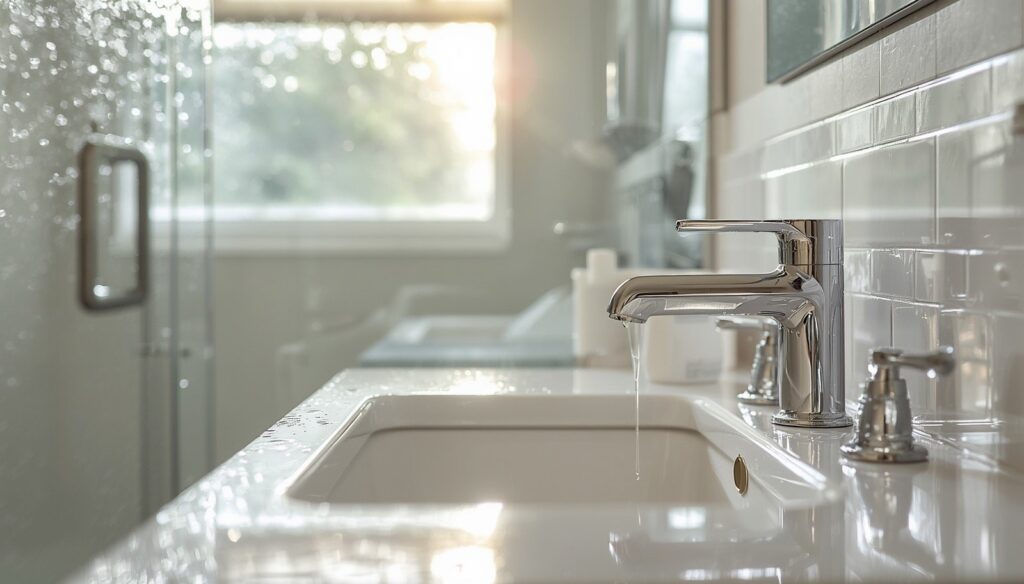
- A stubborn white film on shower doors and chrome fixtures
- Crusty buildup choking your showerhead and slowing the flow
- Soap and shampoo that never quite lather, and skin that feels dry after a shower
- Scale inside the coffee maker and, less visibly, inside the water heater
None of this is a health hazard — hardness is a nuisance, not a contaminant — but it’s a real one. Scale makes water heaters and dishwashers work harder and wear out faster, and it makes your bathroom look grimy no matter how often you wipe it down. Pair it with Houston summer humidity and you’ve got soap scum and mildew teaming up on the same shower door.
How to Actually Beat Hard Water Buildup
Scale is stubborn, but it’s beatable, and the trick is that mild acid dissolves it. You don’t need anything exotic:
- Plain white vinegar is your best friend. Soak a rag or paper towel in vinegar and drape it over the faucet or fixture for 15–30 minutes, then wipe. The acid loosens the mineral bond so it wipes away instead of requiring a chisel.
- Bag the showerhead. Fill a plastic bag with vinegar, tie it over the showerhead so the holes are submerged, and leave it overnight. The flow comes back like new.
- Descale the appliances. Run a cycle of vinegar through your coffee maker every few weeks, and don’t ignore the dishwasher. A rinse aid genuinely helps with the spotting.
- Squeegee the shower. Ten seconds after each shower keeps water from sitting and drying into new scale. It’s the single easiest habit on this list.
- Wipe fixtures dry. Buildup forms where water pools and evaporates. Dry the counter around the sink and you starve the problem.
For a longer-term fix, a lot of Houston homeowners eventually install a water softener — it swaps out the calcium and magnesium before they ever reach your pipes, and it protects your appliances in the bargain. That’s a plumbing decision, not a cleaning one, but it pairs well with regular upkeep.
Where a Cleaning Service Fits In
Here’s the honest truth: Houston summer humidity and hard water don’t take the season off, and neither can your cleaning routine. Mildew comes back the moment a surface stays damp, and scale rebuilds the week after you scrub it. Staying ahead of both is really about consistency more than elbow grease.
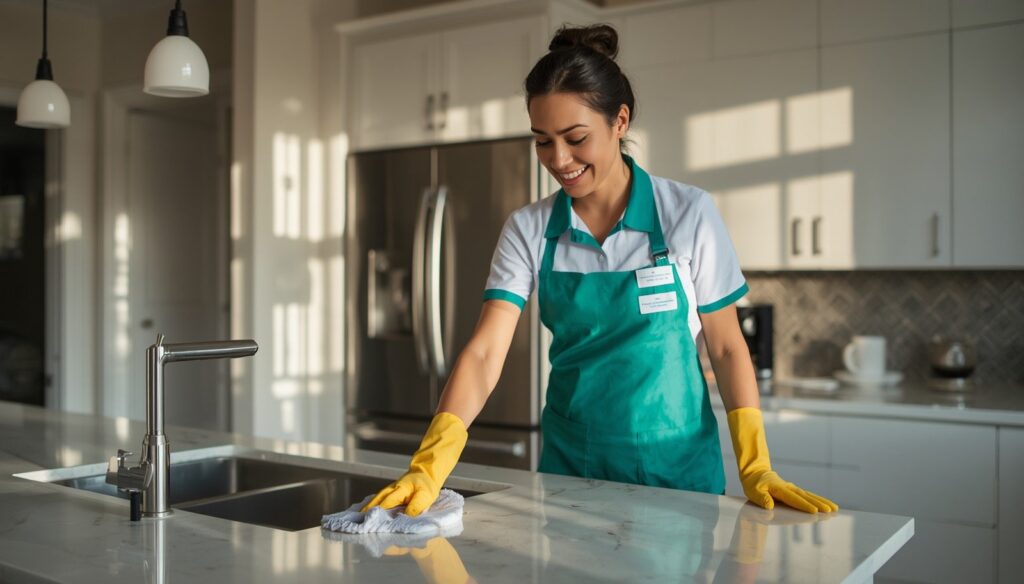
That’s exactly what a recurring visit is built for. Our regular home cleaning keeps the moisture-prone corners and mineral-loving fixtures from ever getting a foothold, so you’re maintaining a clean home instead of rescuing one. Moving in or out during peak season? A dedicated move-in / move-out clean tackles the scale and mildew that build up in a place that’s been sitting.
We use eco-friendly products, our cleaners are background-checked and insured, and every visit comes with a satisfaction guarantee. If you’ve got questions before booking, the FAQ page covers the common ones, and you can always reach out directly for a quick quote.
Houston’s climate is what it is — hot, sticky, and hard on your home. But with a little moisture discipline, a bottle of vinegar, and a cleaning routine you can actually count on, mold, mildew, and scale don’t stand much of a chance. Ready for a home that stays fresh through the worst of summer? Book with Lily White Maids and let us handle the humidity’s dirty work.
Lily White Maids provides professional home cleaning across Houston, TX, including deep cleans, recurring service, and one-time refreshes. Call (832) 229-7528 or book online today.